




Expectations vs. Reality in Relationships: 7 Common Misconceptions

By
Marriage.com Editorial Team
The Marriage.com Editorial Team is a group of experienced relationship writers, experts, and mental health professionals. We provide practical and research-backed advice on relationships. Our content is thoroughly reviewed by experts to ensure that we offer high-quality and reliable relationship advice.
Learn about Our Editorial Process
11.7k Reads
Updated: 7 Nov, 2025
Heal & Grow Daily for a Happier Relationship
Subscribe FREETable of Contents
View more
Key Takeaways
Love can be such a beautiful mystery, can’t it?
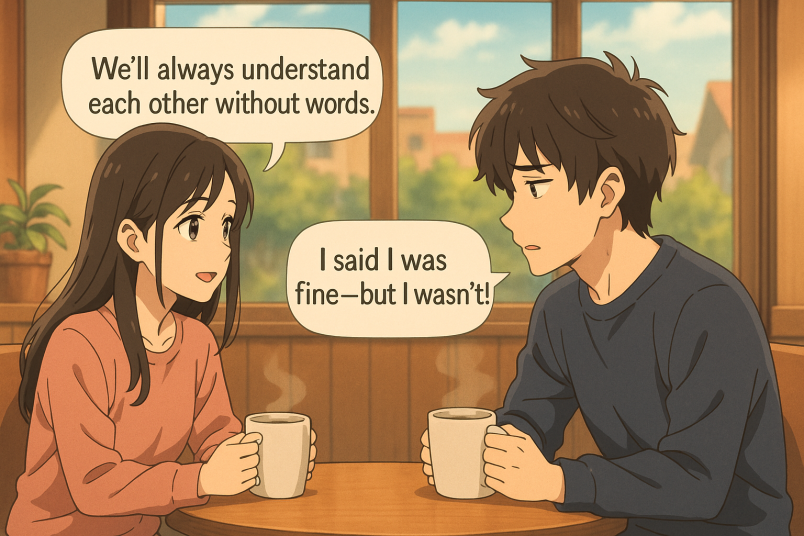
We grow up dreaming of picture-perfect romance, the kind filled with effortless understanding, constant affection, and grand gestures. But then real life happens; work stress, misunderstandings, and quiet evenings replace the fireworks we once imagined.
It’s easy to wonder, “Is this how it’s supposed to be?”
The truth is, the gap between expectation vs. reality in relationships can surprise even the most grounded hearts. Sometimes we expect perfection, only to find that love is about patience, communication, and showing up even when it’s hard.
And that’s where the magic often hides, not in fantasy, but in the beautifully imperfect rhythm of real connection.
What are relationship expectations?
Every relationship begins with a set of unspoken ideas, little hopes about how love should look and feel. We imagine the effort, the attention, the perfect balance of affection and understanding. These ideas become the quiet framework guiding how we give and receive love.
Research shows that positive relationship expectations often lead to stronger, more satisfying connections marked by persistence, forgiveness, and prorelationship behavior. However, overly idealistic expectations can sometimes harm the health of relationships.
Expectations in relationships often grow from our past experiences, what we’ve seen in others, or what we’ve learned from stories and movies. Yet, when those ideals meet the unpredictability of real life, things can feel a bit shaky.
It’s in those moments of mismatch that we start learning what love truly means… patient, imperfect, and wonderfully human.
RELATED READING : 10 Realistic Expectations in a Relationship
Expectations vs. reality in relationships: 7 common misconceptions
It’s easy to imagine what love should look like—effortless harmony, endless affection, and perfect understanding. But real relationships rarely follow that script.
Between what we expect and what actually happens lies a space filled with learning, growth, and sometimes surprise. Let’s explore a few common misconceptions that often blur that line.
1. The “you complete me” idea
Many people believe true love means finding someone who fills every gap in their lives. It sounds romantic, almost magical… but it can also set up unrealistic pressure for both partners.
-
Expectation: My partner completes me! They are my other half!
In this expectation, when we finally meet “the one,” we will feel complete, whole, and happy. This ideal partner will fill in all our missing pieces and make up for our shortcomings, and we will do the same for them.
-
Reality: I am a whole person on my own
It sounds cliché, but you can never find the right person to love if you are not whole yourself. This doesn’t mean that you have no issues or work to do on yourself, but rather that you look to yourself to meet your most important needs.
You do not depend on another person to make you feel valid and worthy — you can find this feeling within yourself and in the life you have built for yourself.
2. The “center of their world” belief

It’s easy to think love means being your partner’s top priority in every way. But when one person becomes another’s entire focus, things can quickly become unbalanced.
-
Expectation: I should be the center of my partner’s world
This is the flipside of the “they complete me” expectation. In this expectation, your partner changes their whole life to focus all their attention and resources on you.
They don’t need outside friends, outside interests, or time to themselves — or, at the very least, they need these things in only very limited quantities.
-
Reality: My partner and I have whole, fulfilling lives of our own
You each had a life before you met, and you need to continue to have those lives even though you’re together now. Neither of you needs the other to be complete. Rather, you’re together because the relationship improves the quality of your lives.
A partner who expects you to drop all outside interests and friendships to focus on them is a partner who wants control, and this is not a healthy or romantic thing at all!
Instead, in a healthy relationship, partners support each other’s outside interests and friendships even as they build a life together.
RELATED READING : How to Find Emotional Fulfillment in a Relationship: Dos & Don’ts
3. The “love should be easy” myth
We often imagine that the right relationship will feel effortless. No arguments, no tension, no rough patches—just smooth sailing forever. But real love is built on patience and teamwork.
-
Expectation: A healthy relationship should be easy all the time
This can also be summed up as “love conquers all.” In this expectation, the “right” relationship is always easy, conflict-free, and comfortable. You and your partner never disagree or have to negotiate or compromise.
-
Reality: Life has ups and downs, but my partner and I are able to weather them
Nothing in life is easy all the time, and this is especially true of relationships. Believing your relationship is doomed at the first sign of difficulty or conflict risks you ending a relationship that could be good for you! While violence and excessive conflict are red flags, the fact is that in every relationship, there will be disagreements, conflicts, and times when you have to compromise or negotiate.
It is not the presence of conflict, but rather the way in which you and your partner manage it, that determines the health of your relationship.
Learning to negotiate, utilizing effective conflict resolution skills, and compromising are essential in forming a healthy, long-lasting relationship.
RELATED READING : 35 Telling Signs of True Love in a Relationship
4. The “love can change them” illusion
Sometimes we fall for someone’s potential—the person we hope they’ll become, not who they truly are. It feels noble to think our love could inspire transformation, but it can lead to disappointment.
-
Expectation: If my partner loved me, they would change
This expectation holds that we can encourage someone we love to change in specific ways, and that their willingness to do so indicates the strength of their love.
Sometimes this takes the form of choosing a partner whom we regard as a “project” — someone who believes or does things that we find problematic, but whom we believe we can transform into a “better” version. There are numerous examples of this in pop culture, and women, in particular, are often encouraged to choose men whom they can “reform” or shape into the ideal partner.
-
Reality: I love my partner for who they are and who they are becoming
People will change over time, that is certain. It’s also important to support our partners in making life changes that will improve their well-being and strengthen our relationships.
But if you are unable to love your partner as they are in a given moment, and instead believe that loving them harder will cause them to change fundamentally, you are in for a disappointment.
Accepting your partner for who they are is a key component of building a healthy relationship.
Expecting a partner to change as “proof” of love — or, conversely, expecting them never to grow and change — is a disservice to your partner, your relationship, and yourself.
A study examined how partner acceptance and felt acceptance influence relationship satisfaction among 209 married couples. Results showed that accepting a partner improves the satisfaction of both partners through feeling accepted (projection effect) and making the partner feel accepted (accuracy effect).
5. The “soulmates never fight” fantasy
Many people think that if two people are truly meant to be, they’ll always get along perfectly. But even the strongest couples argue sometimes—it’s part of being human.
-
Expectation: True love means never arguing
The belief goes that perfect couples never disagree, because they understand each other completely and always want the same things. Every moment feels calm, loving, and perfectly in sync, without tension or frustration.
-
Reality: Disagreements are natural, but respect matters most
Healthy couples argue, but they do so with empathy and care. Differences don’t signal failure; they create opportunities to understand each other better. The key isn’t avoiding fights, but learning to communicate and repair with love.
RELATED READING : Recognizing Soulmate Energy: 25 Signs to Look Out For
6. The “jealousy proves love” misunderstanding
Movies and stories often teach us that jealousy is a sign of deep affection. But in reality, it can signal fear, insecurity, or lack of trust rather than love.
-
Expectation: If my partner gets jealous, it means they really care
Some people believe a jealous partner is more emotionally invested—that possessiveness equals passion. The idea of someone “fighting” for you feels flattering and even romantic at first.
-
Reality: Trust is the real sign of love
Healthy love feels secure. You and your partner should feel safe to be yourselves without fear or suspicion. Love rooted in trust and communication will always outlast love tangled in jealousy.
RELATED READING : 15 Signs of Jealousy in Relationships & Ways to Deal With It
7. The “commitment fixes everything” hope
It’s common to think that marriage, moving in together, or having a baby will automatically strengthen a struggling relationship. But commitment doesn’t erase deeper issues.
-
Expectation: Once we’re married or settled, things will get better
The idea is that taking a big step—such as marriage or a long-term commitment—will magically make problems disappear. The promise of “forever” seems strong enough to heal all the cracks that came before.
-
Reality: Commitment deepens what already exists
If your foundation is healthy, commitment can strengthen it. But if it’s shaky, those same challenges often grow. Real connection comes from honest communication and shared growth, not milestones alone.
Watch this video in which Jillian Turecki, a renowned relationship expert, explains the difference between unmet needs and unrealistic expectations, and shares heartfelt advice on where to draw the line:

How to align expectations with reality
Love isn’t about lowering your expectations; it’s about understanding where they come from and how they shape what you give and receive. We all imagine how things should feel, but reality often asks for a little more patience, honesty, and flexibility.
So how do we bridge that gap between what we dream of and what truly lasts?
Start by noticing your patterns—what do you expect when things get hard, when your partner disagrees, or when you feel unheard?
Awareness is powerful; it helps you respond instead of react. Here are a few gentle ways to align expectations with reality while being in a relationship:
- Communicate openly about needs, fears, and hopes.
- Practice gratitude for what’s working instead of focusing only on what’s missing.
- Give your partner (and yourself) room to grow and change.
- Remember that effort, not perfection, builds connection.
- Revisit expectations regularly as your relationship evolves.
When you allow love to be real, not just ideal, you create space for something deeper—something imperfect, yes, but beautifully genuine. After all, it’s not about having a flawless story… it’s about learning to write it together, one honest chapter at a time.
RELATED READING : How to Manage Healthy Expectations in a Relationship: 7 Tips
Embracing real love and growth
Love is rarely what we first imagine; it’s softer, slower, and sometimes a little messy. And that’s okay! The truth behind expectation vs. reality in relationships is that real love isn’t about perfection; it’s about patience, understanding, and choosing each other through the highs and lows.
We all bring our own dreams into love, but the beauty lies in how we grow beyond them. When we stop chasing the ideal and start appreciating the real, connection deepens.
After all, the most meaningful relationships aren’t flawless fairy tales… they’re honest, evolving stories written with care, compassion, and a whole lot of heart.
Helpful?
Continue exploring this topic

Marriage.com AI: Your Relationship Guide
Talk through what's on your mind.
Automated
YOU COULD START WITH
Share this article on
Marriage.com Editorial Team
Relationship & Marriage Advice
The Marriage.com Editorial Team is a group of experienced relationship writers, experts, and mental health professionals. We provide practical and research-backed advice on relationships. Our content is thoroughly reviewed by experts... Read more to ensure that we offer high-quality and reliable relationship advice. Read less
 Reviewed by
Marriage.com Community
Real people. Real relationships. No judgment.
How do couples survive big life stress without turning on each other?
Have you navigated this in your own relationship?
Your perspective could help thousands of couples.
See what people are saying
Your perspective could help thousands of couples.


Recent Articles


Related Quizzes







 We'd love your feedback!
 Thanks for your feedback!