




What Is a Triad Relationship and How Does It Work?

Reviewed By
Christiana Njoku, LPC
 Review Board Member
|
By
Licensed Professional Counselor
Review Board Member
7.3k Reads
Updated: 3 Nov, 2025
Unlock Daily 30-Sec Tips for a Happier Relationship
👉 Subscribe FREEKey Takeaways
Marriage.com AI Quick Summary
Love can take many shapes, can’t it?
Sometimes, it grows quietly between two people; other times, it expands unexpectedly to welcome someone new. When three individuals choose to share affection, trust, and emotional depth together, they can create a bond that feels both complex and beautifully balanced.
Of course, it’s not always easy; navigating feelings, setting boundaries, and keeping communication open takes care and honesty. Yet for those involved, the connection can feel deeply fulfilling… like finding harmony in a song with three voices instead of two.
A triad relationship invites a kind of closeness that challenges how we think about love and how far our hearts are willing to reach.
What is a triad relationship?
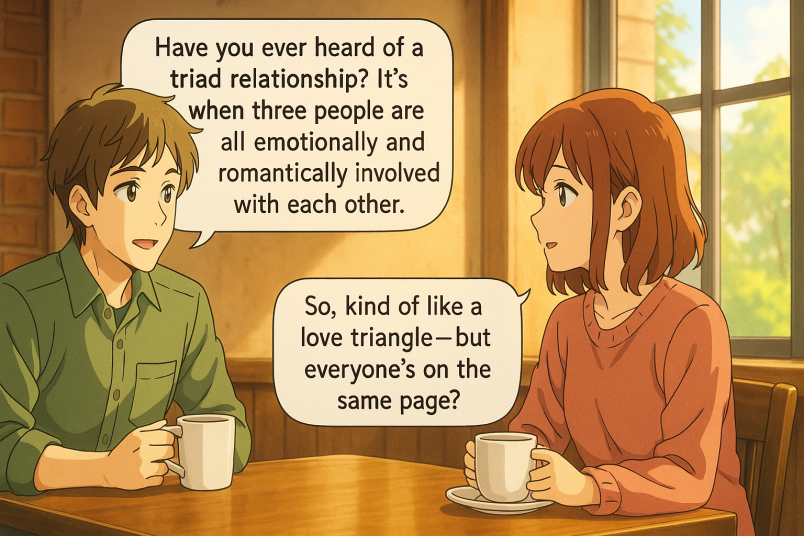
A triad relationship, often known as a “throuple,” is a romantic or intimate partnership involving three people who are all connected to one another. It is not about following a set formula; it is about creating a bond that works for everyone involved.
How does it all come together?
Clear communication, respect, and mutual understanding are key, especially when managing throuple dynamics.
Triad relationship rules can vary depending on the needs and boundaries of those involved. For some, it is about equality and shared experiences; for others, it might focus on individual connections within the group.
At its heart, it is about love, trust, and building something unique… together.
Despite the focus on monogamy in relationship science, polyamorous relationships are surprisingly common. This US study found that 1 in 6 adults desire polyamory, and 1 in 9 have engaged in it.
5 common types of triad relationships
Triad relationships come in different forms, each reflecting the unique needs, desires, and boundaries of the people involved. Whether the focus is on exclusivity, freedom, or balance, these relationships are as diverse as the individuals creating them.
Let us explore 5 common types and how their relationship dynamics in a triad work.
-
Closed triad relationship
A closed triad relationship involves three people who commit exclusively to one another. There are no external romantic or sexual connections, which can make boundaries clearer and trust easier to maintain.
Research shows how the support of partners, particularly nurturing and facilitating actions, significantly impacts self-improvement success and relationship quality. Criticizing or invalidating support hinders progress, highlighting the importance of supportive partners for personal growth.
This type of relationship often emphasizes equality, shared love, and teamwork. It requires open communication and a willingness to meet everyone’s emotional needs. For many, this structure creates a safe, intimate space to grow together.
- Here’s a thing: This sense of security and mutual devotion can feel deeply grounding, giving all partners a stable emotional home in which to thrive.
RELATED READING : What Is Triad Relationship Counseling & Its Advantages
-
Open triad relationship
In an open triad relationship, the three partners may choose to explore connections outside the triad. This could involve dating other people or forming additional partnerships. It brings a sense of freedom and individuality, but it also requires strong communication to maintain trust.
Balancing personal exploration with the core triad can strengthen bonds or reveal areas needing attention. Setting clear boundaries is essential to ensure everyone feels respected and secure.
- Here’s a thing: Openness can bring both joy and growth when handled with care, honesty, and a genuine respect for everyone’s comfort zones.
RELATED READING : 20 Pros and Cons of an Open Relationship
-
Hierarchical triad

A hierarchical triad has different levels of commitment among the partners. Two individuals may be a primary couple, while the third plays a secondary role. This structure acknowledges varying levels of closeness or dependency within the triad.
It can help manage expectations, but might require more effort to ensure the secondary partner feels valued. Honest discussions about roles and priorities are key to maintaining balance and harmony.
- Here’s a thing: With thoughtful communication and empathy, hierarchy doesn’t have to mean inequality—it can simply reflect different emotional rhythms within the same bond.
-
Egalitarian triad
An egalitarian triad is about maintaining equal connections between all three partners. No one person is prioritized over another, creating a dynamic of shared love and responsibility.
This structure can bring a sense of fairness and unity, but it also requires intentional effort to meet everyone’s needs equally. Relationship dynamics in a triad like this thrive on communication, patience, and shared decision-making.
-
- Here’s a thing: Equality takes practice—it’s less about perfect balance and more about showing up for each other with honesty and compassion every day.
-
Parallel triad
In a parallel triad, each partner has an individual connection with the others, but there is less focus on the three spending time together as a unit. This type offers flexibility and allows each relationship to grow at its own pace.
It works well for people who value independence while still wanting a meaningful connection within the triad. Open dialogue about expectations ensures everyone feels supported and understood.
- Here’s a thing: This setup celebrates individuality while keeping love at the center, showing that connection doesn’t always have to look the same for everyone.
Is a triad the same as an open relationship or polyamory?
A triad, an open relationship, and polyamory might seem similar at first glance, but they are distinct in meaningful ways.
- A triad involves three people in a committed relationship, often forming deep bonds as a unit.
- Open relationships usually focus on two partners who agree to explore romantic or sexual connections outside their primary bond.
- Polyamory, on the other hand, embraces the possibility of forming multiple meaningful relationships, with love and connection at the core.
To better understand how these differ, here is a simple breakdown:
Aspect Triad Open Relationship Polyamory
Core structure Three individuals in a shared relationship Two primary partners with outside connections Multiple independent or interconnected relationships
Focus Building bonds as a trio Exploring external romantic or sexual connections Emphasizing love and emotional connections with others
Commitment style Often closed but can be open Open by agreement Can include both open and closed dynamics
Emotional connection Usually shared among all three Primarily between the primary couple Valued equally across multiple partners
Communication needs High, with all three involved High, especially for setting boundaries Extremely high, with multiple relationships to manage
RELATED READING : 9 Different Types of Polyamorous Relationships
7 ways triad relationships work in practice
Triad relationships are unique, with their own rhythm and challenges, but they thrive when built on a foundation of trust, understanding, and shared goals.
While the dynamics can differ depending on the people involved, there are common practices that help triads function harmoniously. Let us explore how these relationships work in practice and what makes them successful.
1. Clear communication among all partners
Open and honest communication is essential in triad relationships. Each partner must feel comfortable expressing their feelings, needs, and concerns without fear of judgment.
Christiana Njoku, LPC, advises,
It is important for couples to communicate about anything in the relationship, including their expectations and boundaries.
This transparency nourishes trust and helps manage misunderstandings or conflicts. Regular check-ins ensure that everyone stays on the same page emotionally and practically.
- What makes it successful: Establishing routines for open dialogue and active listening creates a safe space for everyone to share their thoughts.
Here’s what you can do:
- Set aside weekly or biweekly “triad talks” to discuss feelings, updates, or any emotional shifts.
- Practice active listening—repeat what your partner says to show you truly understand their point.
- Use “I” statements (like “I feel…” instead of “You always…”) to express emotions without blame.
RELATED READING : 10 Effective Communication Skills in Relationships
2. Defining boundaries together
Setting boundaries is crucial for balancing individual needs with group dynamics. Boundaries might include how time is divided, rules for physical intimacy, or limits on external connections.
These guidelines provide structure while respecting individual comfort levels. Clear agreements minimize misunderstandings and keep the relationship healthy.
- What makes it successful: Revisiting boundaries regularly ensures they remain relevant as the relationship evolves.
Here’s what you can do:
- Write down shared boundaries and review them monthly to see if they still feel right.
- Encourage each partner to express personal limits without fear of being dismissed.
- Treat boundary discussions as ongoing—not one-time—conversations that grow with the relationship.
RELATED READING : 17 Ways of Setting Boundaries in a New Relationship
3. Balancing time and attention
In a triad, ensuring everyone feels equally valued requires intentional effort. Balancing one-on-one time with shared experiences strengthens individual connections and the group bond.
While it might not always be perfectly equal, prioritizing fairness helps everyone feel seen and appreciated.
- What makes it successful: Creating a schedule that includes individual and group time can prevent feelings of neglect or imbalance.
Here’s what you can do:
- Plan both trio dates and one-on-one outings to nurture every connection.
- Rotate who gets to plan group activities so everyone feels involved and considered.
- Be open about how much alone time or shared time each partner needs—it helps prevent resentment.
RELATED READING : Top 3 Tools for Showing Attention to Your Spouse
4. Dealing with jealousy with care
Jealousy can arise in any relationship, but in triads, it requires thoughtful handling. Acknowledging feelings without judgment and discussing them openly helps reduce tension.
Viewing jealousy as an opportunity to address insecurities rather than a threat strengthens the relationship.
- What makes it successful: Practicing empathy and reinforcing trust can turn moments of jealousy into opportunities for growth.
Here’s what you can do:
- Name the emotion when it comes up instead of suppressing it—it loses power when voiced.
- Ask for reassurance in a calm, specific way instead of making comparisons.
- Reflect on what triggered the feeling and share it with your partners for deeper understanding.
RELATED READING : How to Deal with Jealousy in Relationships
5. Building a shared vision
Having shared goals, whether practical or emotional, gives triads a sense of unity. This might include decisions about living arrangements, future plans, or the dynamics they want to cultivate.
Aligning on a vision ensures all partners are working toward a common purpose.
- What makes it successful: Regularly revisiting these goals keeps everyone connected and invested in the relationship’s direction.
Here’s what you can do:
- Create a shared “vision board” or list of goals—both big and small—that reflect your collective values.
- Revisit the list every few months and adjust based on new experiences or priorities.
- Celebrate milestones together, no matter how small, to reinforce a sense of teamwork.
RELATED READING : 7 Practical Exercises for Creating a Relationship Vision
6. Taking precautions in triad relationships
Precautions in triad relationships include protecting emotional well-being and ensuring sexual health.
Discussing safe practices, including STI testing and emotional boundaries, helps everyone feel secure. Proactive care prevents misunderstandings and builds trust.
- What makes it successful: Prioritizing honesty and mutual care ensures a strong foundation for long-term stability.
Here’s what you can do:
- Schedule regular STI screenings as a group or individually to ensure transparency.
- Check in about emotional well-being after significant relationship changes or new experiences.
- Create an agreement about safe practices and update it whenever dynamics shift.
7. Embracing flexibility and adaptability
Triad relationships thrive when partners remain open to change. Needs and dynamics evolve over time, and flexibility allows the relationship to grow.
Adaptability is key, whether it is adjusting boundaries or finding new ways to connect.
- What makes it successful: Approaching challenges with patience and a willingness to learn helps the relationship flourish.
Here’s what you can do:
- Hold “reflection talks” when major changes happen to see how everyone is adjusting.
- Stay open to redefining roles or expectations as feelings evolve.
- Approach conflict as a shared puzzle to solve, not a battle to win.
RELATED READING : Flexibility or Honesty in a Relationship, What Matters More?
What are the common challenges in triad relationships?
Triad relationships can be beautiful, but like any relationship, they have challenges. One common hurdle is balancing time and attention; ensuring all partners feel equally valued can take effort.
Jealousy might surface, too, even in the most secure connections, requiring open communication and reassurance. Clear boundaries are vital, but they can be tricky to define or adjust as needs evolve.
Miscommunication can cause misunderstandings, especially when three voices and perspectives are involved. External judgment or societal stigma might also create pressure, testing the trio’s resilience.
Of course, maintaining emotional intimacy within a triad takes ongoing work. Care, patience, and a commitment to understanding one another can turn these challenges into growth opportunities.
Watch this video by Brut America, where they interview a Throuple and discuss various things about this unique relationship:

Is a triad relationship right for you?
A triad relationship can be a deeply fulfilling experience for some, but it is not the right fit for everyone. It requires open communication, a willingness to share emotional space, and a strong foundation of trust.
Are you comfortable exploring connections that involve more than two people?
Do you have the patience to manage the unique dynamics of a triad?
Christiana Njoku, LPC, points out,
All you need to do is invest in gaining knowledge about what you are not familiar with before venturing into it.
Before considering this path, reflecting on your feelings, boundaries, and expectations is essential. Understanding your comfort level with shared intimacy and the potential challenges ahead can help you decide if this type of relationship aligns with your values and needs.
Questions to ask yourself and your partners:
- Are we open to sharing attention and forming connections with one another simultaneously?
- How do we handle feelings of jealousy, and are we willing to address them openly?
- What are our personal boundaries, and how might they evolve in a triad relationship?
- Do we have the communication skills to express our needs and listen to one another?
- Are we prepared to handle external judgment or misunderstandings about triad relationships together?
Taking the time to ask these questions can bring clarity. A triad relationship thrives on mutual understanding, respect, and a shared commitment to building something meaningful.
If these elements feel aligned with your values, it might be a path worth exploring.
RELATED QUIZ : Am I in the Right Relationship Quiz?
Watch out for red flags in a triad!
Triad relationships can bring deep love, connection, and excitement when built on trust and open communication. But, like any relationship, they also require ongoing effort and self-awareness.
Watch out for red flags like a lack of clear boundaries, poor communication, or unaddressed jealousy. If any partner feels neglected, dismissed, or unheard, it’s important to address it early on.
While challenges are a natural part of any relationship, being mindful of these signs can help protect your emotional well-being. Triads can thrive and grow into something truly beautiful with care, patience, and mutual respect!
Did you find this article helpful?

 Tips
Tips
Write your tip or submit a video tip
All tips are reviewed before the publishing.
You are:

 >
>
Share this article on

Cindy Mikulski
Want to have a happier, healthier marriage?
If you feel disconnected or frustrated about the state of your marriage but want to avoid separation and/or divorce, the marriage.com course meant for married couples is an excellent resource to help you overcome the most challenging aspects of being married.
Related Articles



Recent Articles



Related Quizzes









Unlock Daily 30-Sec Tips for a Happier, Healthier Relationship
👉 Subscribe FREE on YouTube
 We'd love your feedback!
 Thanks for your feedback!
 Expert Q&A
Ask your question related to this topic & get the support you deserve from experts.