




My Wife Never Initiates Intimacy: 15 Reasons and Ways to Deal

Reviewed By
Kimberly Smith, LMHC
 Review Board Member
|
By
Licensed Mental Health Counselor
Review Board MemberExperience a Therapeutic Journey with a Warm and Interactive Approach. In my practice, I prioritize creating a therapeutic space characterized by warmth, interaction, and... Read More
Rachael Pace, Author

Rachael Pace inspires with motivational articles on loving partnerships. She encourages making room for love and facing challenges together.
Learn about Our Editorial Process
5.7k Reads
Updated: 8 Apr, 2026
Heal & Grow Daily for a Happier Relationship
Subscribe FREETable of Contents
View more
Key Takeaways
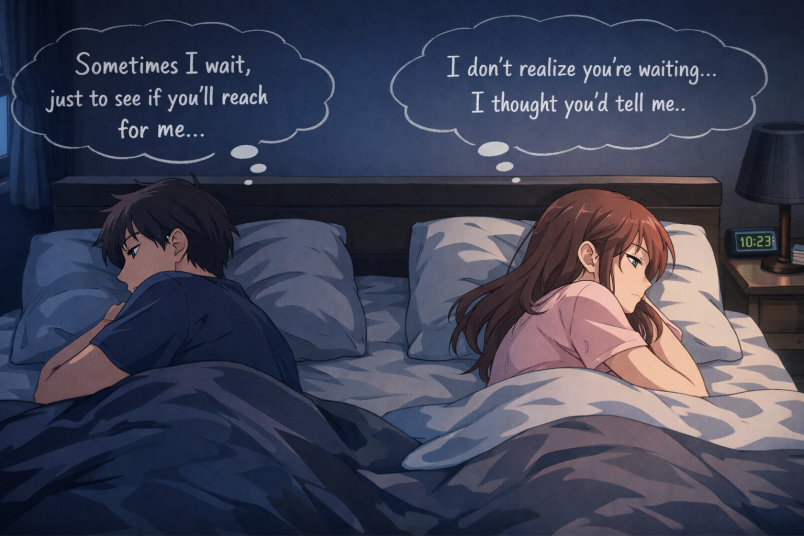
There are nights when you lie awake, wondering if you are the only one who still reaches. When every touch, every invitation, every quiet moment of closeness comes from you and only you. And slowly, without meaning to, you start asking questions that feel too painful to say out loud.
Is something wrong with you? With her? With the two of you together?
According to Kimberly Smith, LMHC, when a partner never initiates intimacy, the person on the receiving end often internalizes it as a personal failure. But in most cases, it has very little to do with them and everything to do with what the other partner is quietly carrying.
You are not alone in this. And this is a safe place to understand it.
What Does “Never Initiating Intimacy” Really Mean?
“Never initiating intimacy” doesn’t always mean there’s no love or attraction. Sometimes it looks like waiting to be touched instead of reaching first… going along with closeness, but never asking for it.
That kind of hesitation is often more layered than it appears. Research offers a useful clue here. In two studies conducted in Greece, researchers examining barriers to starting intimate relationships identified 58 different reasons people struggle to initiate, grouped across emotional, practical, and personal factors.
The larger point is simple: initiation is not always blocked by lack of desire alone. It can also be shaped by fear, discomfort, uncertainty, or the way someone has learned to relate to intimacy.
That insight matters in long-term relationships, too. You might notice that affection only happens when you start it, or that desire feels passive rather than mutual. Over time, this pattern can create quiet tension and self-doubt.
Is she uninterested, uncomfortable, exhausted, or simply wired differently?
In many relationships, intimacy becomes something one partner manages while the other responds. That imbalance matters. Not because initiation is everything, but because feeling wanted, chosen, and desired on purpose still matters deeply.
- Is this normal? What research actually says
Yes, it is more common than most couples ever talk about.
Research on desire in long-term relationships suggests that sexual desire often becomes less spontaneous over time, especially for women, and may depend more on context, emotional connection, stress levels, and relationship dynamics than many people expect.
That does not mean anything is wrong or that attraction has disappeared overnight. It means desire often needs the right conditions to emerge. And one thing becomes clear in many relationships: pressure and obligation tend to shut desire down rather than restore it.
When initiation becomes one-sided, it is often a sign of deeper dynamics at play, not a personal failure and not something solved by simply trying harder.
15 Common Reasons A Wife May Never Initiate Intimacy
Before diving in, it helps to pause for a moment. A lack of initiation rarely comes from one simple cause. It’s usually layered… shaped by emotions, experiences, dynamics, and sometimes quiet decisions that were never spoken out loud.
These 15 reasons aren’t about blame or fault; they’re about understanding what may be happening beneath the surface, even when love still exists.
-
Emotional and psychological factors
Sometimes desire fades not because of the relationship, but because of what’s happening internally. Stress, anxiety, emotional exhaustion, or unresolved hurt can quietly shut desire down. When someone feels overwhelmed or disconnected from themselves, initiating intimacy can feel impossible, not intentional.
1. Emotional shutdown or unresolved resentment
Sometimes intimacy disappears long before sex does. Unspoken hurt, lingering resentment, or emotional wounds that were never fully addressed can quietly close someone off.
Kimberly Smith, LMHC, says that emotional shutdown rarely happens overnight. It builds quietly through unspoken hurts and moments that felt too risky to address. By the time a partner stops initiating entirely, the emotional distance has usually been growing for much longer than either person realized.
She may still function, care, and show up in daily life… but emotionally, she’s guarded. When that happens, initiating intimacy can feel unsafe or undeserved, even if she can’t fully explain why.
What you can do:
- Create a calm, low-pressure moment to ask how she has been feeling emotionally, not about sex, but about the relationship overall
- Acknowledge any unresolved arguments or tension you are aware of and express a genuine willingness to work through them
- Consider couples therapy as a structured and safe space to surface what has been left unspoken
2. Feeling pressured, monitored, or evaluated around sex
When intimacy starts to feel tracked, measured, or emotionally charged, desire often retreats. If every touch carries an expectation, or every “no” feels like a failure, initiation can become a stressful process instead of a natural one.
Even subtle pressure can turn closeness into performance… and no one wants to initiate under a spotlight.
What you can do:
- Consciously remove any visible or implied tracking of how often sex happens
- Respond to a no with warmth and ease rather than visible disappointment or withdrawal
- Create moments of physical closeness that carry no expectation, such as a hug, a hand held, or sitting together, so touch stops feeling like a prelude to something
3. Loss of erotic identity
Over time, many women stop seeing themselves as sexual beings and start seeing themselves only through roles. Partner, parent, caretaker, problem-solver.
Desire doesn’t disappear overnight; it fades when there’s no space to feel playful, attractive, or wanted as a person. Initiation requires access to that part of the self… and sometimes, it’s been buried for years.
What you can do:
- Tell her specifically and sincerely what you find attractive about her, beyond her roles
- Plan time together that has nothing to do with responsibilities, parenting, or household tasks
- Ask her what makes her feel like herself and create more space for that in her daily life
4. Anxiety, depression, or chronic stress
Mental health struggles can drain desire in quiet ways. When your mind is constantly racing, worrying, or exhausted, intimacy can feel like just another demand.
If you’ve ever wondered, “Why does my wife never initiate intimacy?”, stress or depression may be shaping her inner world far more than a lack of attraction ever could.
What you can do:
- Gently ask how she has been feeling and listen without immediately trying to fix or solve anything
- Reduce her overall load where you can, practically and emotionally, so she feels less depleted going into the evening
- Encourage professional support for mental health without framing it as a solution to the intimacy issue
5. Past sexual experiences or unprocessed trauma

Past experiences don’t always stay in the past. Even without conscious memories, the body remembers. Touch, closeness, or vulnerability can trigger discomfort, shutdown, or avoidance.
Initiation, especially, requires a sense of safety and control. When that safety was once compromised, pulling back can feel like self-protection rather than rejection.
What you can do:
- Never push past hesitation or discomfort, even gently. Let her set the pace entirely
- Create consistent emotional safety by being predictable, patient, and non-reactive around intimacy
- Gently encourage trauma-informed therapy if she is open to it, without making it contingent on improving your sex life
- Relationship and dynamic factors
Intimacy doesn’t exist in a vacuum. Patterns of pressure, resentment, unspoken expectations, or emotional distance can slowly change how safe or appealing initiation feels. Over time, sex can stop feeling like a connection and start feeling like a responsibility… and desire tends to retreat from obligation.
6. Power imbalances and covert contracts
Sometimes intimacy gets tangled up with unspoken deals. “If I do this, maybe she’ll want me,” or “If I say yes often enough, things will improve.” Over time, these quiet contracts create imbalance and resentment on both sides.
Desire doesn’t grow in transactions. When sex feels owed, earned, or monitored, initiation often disappears… not out of cruelty, but self-protection.
What you can do:
- Reflect honestly on whether any of your affectionate gestures carry an unspoken expectation of sex in return
- Have a direct conversation about what both of you actually need from intimacy, separate from obligation
- Work toward physical closeness that feels genuinely mutual rather than earned or owed
7. Sex becoming a battleground
When intimacy is carried with unresolved conflict, it stops being about closeness and begins to carry emotional weight. Arguments, disappointment, and rejection can all collect around sex until it feels tense instead of connecting.
If you’ve found yourself asking, “How come my wife never initiates intimacy?”, it may be because sex has become a place where old fights quietly resurface.
What you can do:
- Prioritize resolving ongoing conflicts outside of any conversation about intimacy
- Avoid bringing up sexual frequency or initiation during or immediately after an argument
- Work on the emotional temperature of the relationship first, since desire tends to return when safety returns
8. Lack of emotional safety
Initiation requires vulnerability. If expressing desire once led to criticism, conflict, or emotional withdrawal, it makes sense to take a step back.
Emotional safety isn’t about never disagreeing; it’s about knowing closeness won’t be used against you later. Without that sense of safety, waiting instead of initiating can feel like the safer choice.
If emotional safety has eroded in your marriage and you want to rebuild it together, the save my marriage course can help you both create the kind of trust and openness that gives desire room to return on its own.
What you can do:
- Ask yourself honestly whether your partner feels emotionally safe expressing desire or hesitation with you
- Respond to her emotional disclosures with curiosity and care rather than defensiveness
- Consistently follow through on small commitments so she learns that vulnerability is safe with you
9. Unspoken sexual mismatch
Sometimes two people simply want different things, at different rhythms, in different ways. When that mismatch goes unspoken, one partner may stop initiating to avoid disappointment or pressure.
It’s not always about disinterest; sometimes it’s about quietly managing expectations and minimizing friction, even if that means sacrificing desire.
What you can do:
- Have a calm, non-pressured conversation about what each of you genuinely enjoys and how often feels right
- Approach the mismatch as a shared puzzle to solve together rather than a problem one person owns
- Consider sex therapy if the gap feels too wide or too uncomfortable to navigate alone
10. Intimacy avoidance as self-protection
Avoiding initiation can be a way to maintain control over emotional exposure. If closeness leads to overwhelm, guilt, or feeling responsible for someone else’s needs, pulling back can feel grounding.
It’s not always conscious. Sometimes avoidance is the only way someone knows how to stay regulated, even when they still care deeply.
What you can do:
- Let her know that her emotional comfort matters to you more than the frequency of sex
- Reduce the emotional weight around intimacy by keeping your reactions calm and consistent when she does or does not initiate
- Explore together what conditions help her feel most relaxed and present, then work to create more of those.
- Physical and biological factors
Bodies change, energy shifts, and hormones fluctuate. Pain, fatigue, medical conditions, or medication side effects can all influence sexual interest in ways that are hard to explain, even to a partner. It’s not always visible, but it’s very real.
11. Hormonal changes
Hormones play a quiet but powerful role in desire. Pregnancy, postpartum shifts, perimenopause, and menopause can all affect libido, arousal, and comfort in ways that feel sudden or confusing.
She may still love her partner deeply… yet feel disconnected from desire itself. When it’s about “My wife never initiates intimacy,” hormonal changes are often an invisible factor, shaping interest without any clear emotional explanation.
What you can do:
- Educate yourself on how hormonal changes affect libido so you can approach the situation with informed empathy rather than confusion
- Encourage a conversation with her doctor about whether hormonal factors may be playing a role
- Shift your focus from frequency to quality of connection during this period
12. Chronic pain, fatigue, or medical conditions
Living in a body that hurts or feels constantly depleted changes how intimacy is experienced. Pain, low energy, autoimmune conditions, or sleep issues can make initiation feel exhausting rather than appealing.
Even when the desire for connection exists, the body may simply not cooperate… and that disconnect can be frustrating for both partners.
What you can do:
- Ask about her physical well-being genuinely and regularly, separate from any conversation about intimacy
- Adapt your expectations around intimacy during flare-ups or periods of high fatigue rather than treating them as obstacles
- Explore non-sexual forms of physical closeness that still feel connected when her body needs rest
13. Medication side effects
Some medications quietly dampen sexual desire. Antidepressants, birth control, blood pressure meds, and others can reduce libido or sensation over time.
According to Kimberly Smith, a licensed mental health counselor:
Medications for medical and mental health conditions can have a side effect of decreased sex drive.
Because these effects often build gradually, they’re easy to overlook or dismiss. What looks like emotional distance may actually be chemistry at work… not a lack of care or attraction.
What you can do:
- Raise the possibility of medication side effects gently and without blame, framing it as something worth exploring together
- Encourage her to speak with her prescribing doctor about whether alternatives or adjustments are possible
- Avoid interpreting medication-driven low libido as emotional withdrawal or lack of attraction
- Hard-to-face realities
And then there are the reasons no one wants to name. Loss of attraction, deep incompatibility, or a quiet acceptance of a low-sex or celibate life. These truths don’t mean anyone failed… but they do change what’s possible moving forward.
14. Loss of attraction
Attraction can shift quietly over time. It doesn’t always disappear because of one event; sometimes it fades through distance, unresolved issues, or changes in how partners see each other.
This can be painful to acknowledge, especially when love and history are still present. Initiation may stop not out of malice, but because desire no longer feels authentic… and forcing it feels wrong.
What you can do:
- Have an honest conversation about the state of attraction in the relationship, approached with care rather than accusation
- Explore couples therapy as a space to understand what has shifted and whether it can be rebuilt
- Accept that some answers to this question may be difficult to hear, and prepare yourself emotionally before opening the conversation
15. Choosing a low-sex or celibate life
Some people, consciously or not, move toward a life with little or no sex. This choice isn’t always announced; it can settle in slowly.
For one partner, it may feel peaceful or manageable. For the other, it can feel devastating. Neither experience is invalid. But when this reality goes unspoken, confusion and resentment tend to grow… quietly, over time.
What you can do:
- Name the pattern directly and compassionately in a calm conversation outside the bedroom
- Ask openly whether this is a conscious choice or something she would like to change, without pressure attached to either answer
- Seek individual or couples therapy to navigate what this reality means for both of you and what path forward feels honest and fair
When “I’ve Done Everything” Still Leads To A Celibate Marriage
For many people, this is the most painful place to land. You show up, you change, you listen, you improve… and still, nothing shifts. Over time, hope turns into exhaustion. When effort doesn’t lead to desire, it can feel unfair, even defeating.
Kimberly Smith, LMHC, adds that one of the most exhausting places a person can be in a relationship is when they have genuinely done the work and still nothing changes. That exhaustion is not weakness.
It is a signal that the dynamic needs professional attention, honest conversation, or, in some cases, a truthful reckoning with what is and is not possible together.
Intimacy isn’t a reward for good behavior; it’s a mutual experience that requires willingness on both sides. Sometimes a marriage becomes celibate not because someone failed to try, but because the deeper dynamic never truly changed.
That realization stings. Yet it can also bring clarity. Because endlessly proving your worth won’t create desire… and carrying that weight alone comes at a real cost.
- What not to do
When intimacy feels one-sided, it’s tempting to overdo everything. Over-functioning, fixing yourself, tracking sex, or bargaining for closeness often backfires. These patterns turn desire into pressure and build quiet resentment.
Avoid treating sex as proof of love, or silencing your own needs just to keep the peace. Wanting mutual desire isn’t selfish… but erasing yourself to preserve the relationship slowly does real damage.
- How to deal without self-erasure
Dealing with this doesn’t mean erasing yourself. It starts with clarity… knowing what you need and what you can live with. Honest conversations matter, not to convince, but to name reality.
Boundaries help prevent resentment and burnout. And support, personal or professional, can bring perspective. Preserving a relationship should never require losing your sense of worth.
Watch this video in which psychotherapist Esther Perel and author Lewis Howes discuss building desire in a long-term relationship:

Can Intimacy Be Rebuilt If She Never Initiates?
Sometimes, yes… and sometimes, no. Intimacy can be rebuilt when both partners are willing to look honestly at what’s been happening beneath the surface. That means curiosity, not blame; openness, not pressure. Small shifts can matter when desire has room to return.
Rebuilding is more likely when there is:
- Willingness from both partners to talk openly
- Emotional safety around desire and rejection
- Space for desire to return without pressure
- Support, such as therapy or guided conversations
But if one partner has emotionally checked out or no longer wants a sexual connection at all, effort alone won’t change that. Hope matters, yet so does realism.
Rebuilding intimacy isn’t about trying harder; it’s about mutual willingness to move toward each other again… and accepting the truth when that willingness isn’t shared.
If those conditions feel like where you and your wife are right now, the save my marriage online course can serve as that guided support, helping you both move toward each other again without pressure, blame, or performance.
FAQs
When intimacy feels one-sided, questions tend to pile up quietly. Some are practical, some are deeply personal, and most are ones people feel too vulnerable to ask out loud. These answers are here to bring some clarity, honesty, and a little relief to what you are carrying.
Is it normal for a wife to never initiate intimacy?
More common than most couples openly discuss. Research shows desire shifts over time, and many women experience responsive rather than spontaneous desire. This means closeness needs the right emotional conditions to emerge. It does not automatically signal a lack of love, but it is worth exploring together.
What does it mean when your partner never initiates sex?
It can mean many things. Emotional distance, exhaustion, hormonal shifts, anxiety, or unspoken resentment are all common contributors. It rarely means your partner has stopped caring. More often, it signals that something emotional, physical, or relational needs honest attention and a safe conversation between both of you.
How do I talk to my wife about initiating more without making her feel pressured?
Choose a calm moment outside the bedroom. Lead with how you feel rather than what she is not doing. Say "I miss feeling wanted by you" rather than "you never initiate." Listen more than you speak. The goal is understanding, not convincing.
Can a marriage survive without physical intimacy?
Some marriages do, when both partners have genuinely agreed to that dynamic. But when one partner deeply desires closeness and the other consistently withdraws, loneliness and resentment tend to grow over time. Whether it survives depends on both partners being honest and willing to work toward each other.
You Deserve a Love That Reaches Back
Living with one-sided intimacy is one of the quietest forms of loneliness there is. You have shown up, tried, and cared deeply. That matters, even when it has not been met in the way you needed.
Understanding why your wife never initiates is not about building a case or assigning blame. It is about seeing the full picture clearly enough to make choices that are honest and kind to both of you.
According to Christiana Njoku, LPC, the most important thing is not chasing answers at the cost of yourself. You deserve clarity, connection, and a love that genuinely reaches back. Whatever comes next, let it be rooted in truth.
Helpful?
Continue exploring this topic

Marriage.com AI: Your Relationship Guide
Talk through what's on your mind.
Automated
YOU COULD START WITH
Share this article on
Rachael Pace
Author
Rachael Pace is a noted relationship writer associated with Marriage.com. She provides inspiration, support, and empowerment in the form of motivational articles and essays. Rachael enjoys studying the evolution of loving partnerships... Read more and is passionate about writing on them. She believes that everyone should make room for love in their lives and encourages couples to work on overcoming their challenges together. Read less

Marriage.com Community
Real people. Real relationships. No judgment.
My partner says they’re still attracted to me, but we barely have sex anymore. Is this just what long-term relationships turn into?
Have you navigated this in your own relationship?
Your perspective could help thousands of couples.
See what people are saying
Your perspective could help thousands of couples.


Recent Articles



Related Quizzes








 We'd love your feedback!
 Thanks for your feedback!