




10 Signs of Dismissive-Avoidant Attachment in Relationships

Reviewed By
Maggie Martinez, LCSW
 Review Board Member
|
By
Licensed Clinical Social Worker
Review Board MemberMaggie enthusiastically works with people to foster self-determination and encourages them to grow in a safe therapeutic environment. She has a background in psychology and... Read More
Rachael Pace, Author

Rachael Pace inspires with motivational articles on loving partnerships. She encourages making room for love and facing challenges together.
Learn about Our Editorial Process
9.5k Reads
Updated: 10 Jul, 2026
Heal & Grow Daily for a Happier Relationship
Subscribe FREETable of Contents
View more
Key Takeaways
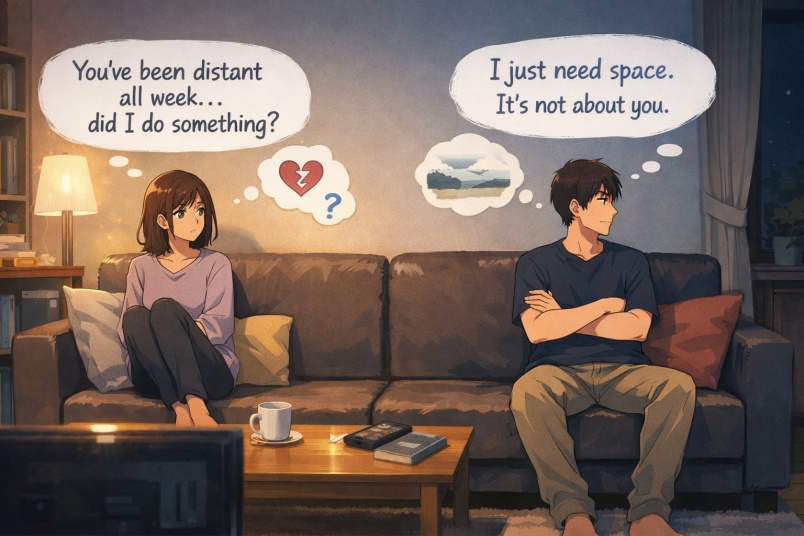
Some people crave closeness… and yet feel safest when there’s space. They care deeply, but pull back when emotions get too close; they want connection, just not the pressure that sometimes comes with it. If that sounds familiar, you’re not broken, cold, or incapable of love.
Often, it’s a learned way of protecting yourself. Dismissive-avoidant attachment can look calm and self-sufficient on the surface, while quietly keeping vulnerability at arm’s length.
The dismissive-avoidant attachment signs aren’t always loud or obvious; they show up in small habits, subtle reactions, and the instinct to rely on yourself first. Understanding where these patterns come from can bring relief, clarity… and compassion for yourself and others.
What is dismissive-avoidant attachment?

Join millions building healthier, happier relationships.
 Subscribe
Dismissive-avoidant attachment is one of four main attachment styles that describe how individuals connect and relate to others in their relationships. People with this attachment style often appear independent and self-sufficient; however, they may struggle to form deep, meaningful relationships.
Individuals with a dismissive-avoidant attachment may have learned early on in life to suppress their emotions and rely solely on themselves, leading them to avoid emotional intimacy and connection with others.
They may also downplay the importance of relationships in their lives and prefer to maintain a sense of emotional distance in order to avoid potential rejection or disappointment.
While it is possible to change one’s attachment style, recognizing and understanding dismissive-avoidant attachment is an important first step toward building healthier and more fulfilling relationships.
5 causes of dismissive-avoidant attachment
Dismissive-avoidant attachment can develop due to various factors, including experiences in childhood and personal temperament. Over time, dismissive-avoidant behavior often becomes a subtle coping strategy, shaped by the need to maintain emotional safety and autonomy.
These patterns don’t appear out of nowhere; they’re usually learned, slowly, and for a reason. Here are 5 potential causes of dismissive-avoidant attachment:
1. Caregiver neglect
Research shows that children who experience neglect or emotional unavailability from their caregivers may learn to become self-sufficient and not rely on others for emotional support.
As a result, they may develop a dismissive-avoidant attachment style in adulthood.
For example, a child raised in an environment where caregivers are emotionally distant or neglectful may adapt by becoming self-reliant, often resulting in a dismissive-avoidant attachment style in adulthood due to a lack of reliance on others for emotional support.
- Remember this: Children don’t choose neglect; they adapt to it. What appears to be emotional distance later in life was once a necessary means of coping with unmet needs.
2. Abandonment or rejection
Experiencing rejection or having a fear of abandonment, such as through a parent’s divorce or death, can lead to a fear of getting close to others and an avoidance of emotional intimacy. This fear can manifest into a dismissive-avoidant attachment style in adulthood.
For example, an individual who experiences abandonment or rejection, perhaps from parental divorce or the death of a close family member, might develop a deep-seated fear of emotional intimacy, leading to a dismissive-avoidant attachment style to avoid potential pain.
- Remember this: Avoiding closeness isn’t a lack of care; it’s often an attempt to prevent reliving loss. Distance can feel safer than risking another emotional goodbye.
RELATED READING : Abandonment Issues in Relationships: Signs, Causes & How to Cope
3. Personal trauma
Studies show that Individuals who have experienced trauma, such as physical or emotional abuse, may develop a need to distance themselves from others in order to protect themselves from further harm. This can lead to a dismissive-avoidant attachment style as a way of coping with the trauma.
For example, experiencing personal trauma such as abuse or severe bullying can lead a person to distance themselves from others as a protective mechanism. This self-preservation tactic can evolve into a dismissive-avoidant attachment style, allowing individuals to avoid further harm.
- Remember this: Trauma teaches the nervous system to stay alert. Pulling away from others may once have been the only way to feel safe enough to function.
4. Overdependence on self
Some individuals may naturally have a temperament that leads them to be independent and self-reliant. When positive experiences reinforce this independence, it can lead to a dismissive-avoidant attachment style.
For example, an individual who prides themselves on independence and self-sufficiency, possibly reinforced by their upbringing or personal successes, may adopt a dismissive-avoidant attachment style, seeing little value in close personal relationships.
- Remember this: Independence isn’t the problem. Difficulty asking for support often develops when relying on others didn’t feel reliable, safe, or rewarding in the past.
RELATED READING : 10 Telltale Signs You’re Too Independent for a Relationship
5. Social and cultural norms
In some cultures or communities, self-reliance and emotional distance may be highly valued traits. This can lead individuals to develop a dismissive-avoidant attachment style as a way of conforming to these norms.
For example, in cultures or societies where independence and emotional stoicism are highly valued, individuals may develop a dismissive-avoidant attachment style as a means of aligning with these societal expectations, prioritizing self-reliance over emotional connection.
- Remember this: Cultural messages shape emotional expression. When vulnerability is discouraged, emotional distance can feel normal, expected, and even praised rather than questioned.
What are the characteristics of a dismissive-avoidant?
Here are some common characteristics of individuals with dismissive-avoidant attachment:
- A preference for solitude and independence
- Difficulty with emotional intimacy and vulnerability
- A tendency to dismiss or minimize the importance of relationships
- A lack of interest in others’ emotions or feelings
- A tendency to avoid commitment
- A reluctance to rely on others for support
- A tendency to suppress emotions and not express their true feelings
- A preference for superficial or casual relationships
- A tendency to idealize past relationships and romanticize the past
- Fear of being controlled or trapped in a relationship
- Difficulty in maintaining long-term relationships
- A tendency to avoid conflicts and disagreements in relationships
It’s important to note that not all individuals with a dismissive-avoidant attachment will exhibit all of these characteristics. There can be individual variations in how this attachment style presents.
Additionally, these dismissive-avoidant traits can change over time with self-awareness and intentional effort to change attachment patterns.
How does the dismissive-avoidant style affect relationships?
The Dismissive-Avoidant Attachment Style has a significant impact on relationships, creating emotional distance and barriers to intimacy.
Individuals with this style often prioritize independence over closeness, leading to difficulties in establishing and maintaining deep, meaningful connections. They might avoid expressing vulnerability, struggle with trusting others, and downplay the importance of relationships, which can leave their partners feeling neglected, unimportant, or overly needy.
This avoidant dismissive attachment can result in a cycle of unmet emotional needs and dissatisfaction for both parties, making it challenging to build a secure, supportive, and loving relationship. Understanding and addressing these behaviors is crucial for fostering healthier, more fulfilling partnerships.
10 signs of dismissive-avoidant attachment in relationships
Attachment theory is the idea that our early relationships with caregivers shape how we form connections with others later in life. There are four primary attachment styles: secure, anxious, avoidant, and disorganized.
People with a dismissive-avoidant attachment style often struggle with emotional intimacy and may distance themselves from their partners. Here are 10 common dismissive-avoidant attachment signs.
1. Independence
Individuals with dismissive-avoidant attachment tend to value their independence above all else. They prioritize their personal goals and interests over their relationships, often struggling to make sacrifices or compromises to maintain their connections with others.
Here’s what you need to look out for:
- Consistently choosing solo plans or personal goals over shared time, even when the relationship needs attention
- Feeling irritated or restricted when a partner asks for emotional or practical support
- Framing emotional needs as “clingy” or unnecessary rather than addressing them directly
RELATED READING : 15 Ways of Being Independent in a Relationship
2. Avoidance of emotions
People with this attachment style tend to downplay the importance of emotions in their lives. They may see emotions as a sign of weakness or vulnerability and, therefore, try to avoid them altogether. This can lead to a lack of emotional intimacy in their relationships.
Here’s what you need to look out for:
- Changing the subject or becoming distant when emotional conversations arise
- Intellectualizing feelings instead of naming or sitting with them
- Minimizing emotional moments by saying things like “it’s not a big deal”
Experts have observed that the avoidance of negative emotions can lead to problems in the future for this attachment style.
3. Discomfort with vulnerability
Related to their avoidance of emotions, people with dismissive-avoidant attachment often feel uncomfortable with vulnerability.
One of the key dismissive-avoidant attachment signs is that these individuals may see vulnerability as a liability and, therefore, try to maintain a facade of strength and self-sufficiency at all times.
Here’s what you need to look out for:
- Sharing successes freely but avoiding fears, insecurities, or emotional struggles
- Feeling exposed or uneasy after opening up, followed by emotional withdrawal
- Using humor, sarcasm, or deflection to avoid deeper emotional moments
RELATED READING : Why Vulnerability in Relationships Matters: 17 Benefits
4. Difficulty with commitment
Commitment can be challenging for those with dismissive-avoidant attachment. They may struggle to fully invest in their relationships, fearing that they will lose their independence or become too emotionally vulnerable.
This can lead to a cycle of short-term relationships or a pattern of avoiding relationships altogether.
Here’s what you need to look out for:
- Hesitating to define the relationship or make long-term plans
- Pulling away emotionally when the relationship starts feeling serious
- Ending relationships when deeper emotional expectations emerge
RELATED READING : Significance of Commitment in Relationships
5. Focus on logic over emotions
Those with dismissive-avoidant attachment tend to prioritize logic over emotions. They may see emotions as irrational or unreliable and therefore rely heavily on their logical mind when making decisions.
This can lead to a lack of consideration in their relationships, as they may struggle to understand or validate their partner’s emotions.
Here’s what you need to look out for:
- Responding to emotional concerns with solutions instead of empathy
- Dismissing feelings as “overreactions” or “not logical”
- Feeling uncomfortable when emotions don’t have a clear explanation
RELATED READING : How to Control Your Emotions in a Relationship: 17 Ways
6. Minimal sharing of personal information
People with dismissive-avoidant attachment tend to be guarded with their personal information.
They may share only superficial details about their life and may be reluctant to open up about their thoughts, feelings, or past experiences. This can make it challenging for their partners to get to know them on a deeper level.
Here’s what you need to look out for:
- Keeping conversations surface-level even in long-term relationships
- Avoiding discussions about childhood, past relationships, or emotional experiences
- Feeling uneasy or exposed when asked personal or reflective questions
7. Avoidance of conflict
Conflict can be particularly challenging for individuals with dismissive-avoidant attachment styles. They may perceive conflict as a threat to their independence or as an unnecessary emotional burden. As a result, they may avoid conflict altogether or withdraw from it when it arises, leading to unresolved issues in their relationships.
Here’s what you need to look out for:
- Shutting down, going silent, or physically leaving during disagreements
- Delaying important conversations indefinitely to “keep the peace”
- Acting distant or cold after a conflict instead of working toward a resolution
RELATED READING : Avoiding Conflict in Relationships: Common Signs & Ways to Deal
8. Disregard for the opinions of others
People with dismissive-avoidant attachment may prioritize their own opinions over those of others.
They may have a strong sense of individuality and may feel uncomfortable compromising or changing their beliefs to accommodate others. This can lead to problems in their relationships.
Here’s what you need to look out for:
- Becoming defensive when challenged or asked to consider another perspective
- Viewing compromise as a loss of autonomy rather than collaboration
- Struggling to acknowledge how their actions emotionally affect others
9. Fear of intimacy
Perhaps one of the most significant dismissive-avoidant attachment signs is a fear of intimacy. Those with this attachment style may struggle to form close relationships, fearing that they will become too emotionally vulnerable or lose their independence.
This can lead to a pattern of distancing themselves from their partners and avoiding emotional connection.
Here’s what you need to look out for:
- Feeling suffocated when emotional closeness increases
- Creating emotional or physical distance after moments of connection
- Preferring relationships that stay emotionally “light” or undefined
10. Limited expression of affection
People with dismissive-avoidant attachment tend to be less expressive with their affection than those with other attachment styles.
Dismissive-avoidant personalities may feel uncomfortable with physical touch or verbal expressions of love and affection. This can make it challenging for their partners to feel loved and supported. Couples counseling can play a significant role in helping partners open up to each other.
Here’s what you need to look out for:
- Rarely initiating physical affection or verbal reassurance
- Feeling awkward or restrained when expressing love openly
- Showing care through actions rather than emotional or verbal intimacy
Being unable to express their feelings can be a significant source of conflict for couples, particularly in the dismissive-anxious dynamic. Check out this video to know more about it:
FAQs
Do you struggle with emotional intimacy in relationships? Discover strategies for building healthy and fulfilling connections with others below:
-
How does a dismissive-avoidant act in love?
Yes, people with dismissive-avoidant attachment can fall in love. However, their attachment style can make it challenging for them to maintain a healthy, intimate relationship.
Dismissive-avoidant attachment in relationships may struggle with emotional intimacy, prioritize their independence over their relationships, and avoid vulnerability and commitment.
As a result, they may have a tendency to distance themselves from their partners or sabotage the relationship.
-
Is the dismissive-avoidant attachment style toxic?
The dismissive-avoidant attachment style itself is not inherently toxic, but it can lead to unhealthy relationship patterns. People with this attachment style may struggle with emotional intimacy and have a tendency to prioritize their independence over their relationships.
This can lead to a lack of consideration in their relationships and make it challenging to maintain a healthy, intimate connection.
-
What are the characteristics of a dismissive-avoidant?
Dismissive-avoidants typically value independence and self-sufficiency highly, often appearing detached or aloof. They might avoid deep emotional connections, struggle with vulnerability, and prioritize their personal space and freedom over close interpersonal relationships.
-
What turns a dismissive-avoidant off?
Dismissive-avoidant women or men are often turned off by perceived clinginess, excessive emotional demands, and attempts to limit their independence. They might react negatively to partners who seek too much attention or intimacy, viewing these needs as encroachments on their personal space.
-
How do you overcome dismissive-avoidant attachment?
Overcoming dismissive-avoidant attachment involves building trust gradually, respecting their need for space, and encouraging open communication. Approach them with understanding and patience, avoid pressure for immediate changes, and support their journey towards recognizing and expressing their emotions more openly.
Final thought
Recognizing these patterns can feel uncomfortable… even a little confronting. But dismissive-avoidant attachment signs aren’t labels meant to box you in; they’re clues. Clues about how you learned to protect yourself, stay steady, and survive emotionally.
Wanting space doesn’t mean you don’t care, and valuing independence doesn’t mean you’re incapable of closeness. Sometimes, it simply means a connection that once felt risky. With awareness comes choice, and with choice comes the room to soften, slowly and safely, on your own terms.
Healing doesn’t require forcing vulnerability; it begins with understanding, patience, and a little self-compassion… “I did the best I could with what I knew.”
Helpful?
Continue exploring this topic

Marriage.com AI: Your Relationship Guide
Talk through what's on your mind.
Automated
YOU COULD START WITH
Share this article on
Rachael Pace
Author
Rachael Pace is a noted relationship writer associated with Marriage.com. She provides inspiration, support, and empowerment in the form of motivational articles and essays. Rachael enjoys studying the evolution of loving partnerships... Read more and is passionate about writing on them. She believes that everyone should make room for love in their lives and encourages couples to work on overcoming their challenges together. Read less

Marriage.com Community
Real people. Real relationships. No judgment.
Do personality tests help couples understand each other or just put people in boxes?
Have you navigated this in your own relationship?
Your perspective could help thousands of couples.
See what people are saying
Your perspective could help thousands of couples.






 We'd love your feedback!
 Thanks for your feedback!