




9 Hidden Reasons Why People Stay in Abusive Relationships

Reviewed By
Dionne Eleanor Reid, Coach
 Review Board Member
|
By
Coach
Review Board MemberDionne is an experienced transformational coach who has worked internationally for over 10 years. She fuses together science and ancient wellness techniques into her offerings.... Read More
Marriage.com Editorial Team

The Marriage.com Editorial Team is a group of experienced relationship writers, experts, and mental health professionals. We provide practical and research-backed advice on relationships. Our content is thoroughly reviewed by experts to ensure that we offer high-quality and reliable relationship advice.
Learn about Our Editorial Process
12.4k Reads
Updated: 31 Oct, 2025
Unlock Daily 30-Sec Tips for a Happier Relationship
👉 Subscribe FREEKey Takeaways
Marriage.com AI Quick Summary
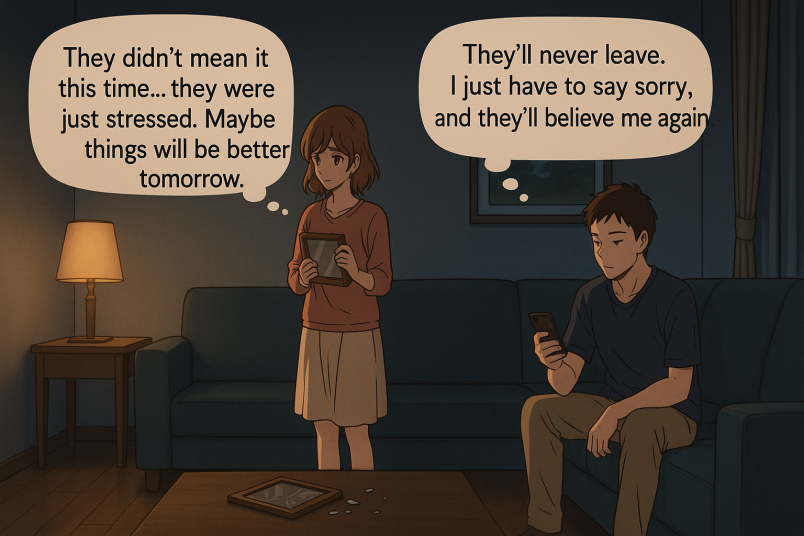
Sometimes love, fear, and confusion blur together until you can’t tell one from the other. What starts as affection slowly turns into control… and before you realize it, you’re walking on eggshells just to keep the peace.
Friends might ask, “Why do people stay in abusive relationships?”—but the truth is rarely simple. There are emotional ties, old hopes, quiet fears, and deep self-doubt all tangled inside the same heart.
Leaving can feel like losing everything, even yourself. It’s not about weakness or ignorance; it’s about survival, love, and the human need to feel safe, even when safety is an illusion. And that’s what makes breaking free such a complicated, painful choice.
What is an abusive relationship, and why is it hard to recognize it?
An abusive relationship isn’t always loud or obvious. It can start with small things, such as criticism disguised as care and control masked as love.
Over time, those moments grow heavier, and you question your worth, even your reality. Sometimes, the abuse is emotional; other times, it’s physical, financial, or psychological.
What makes it so hard to recognize is how gradual it feels… like a slow fog settling in. You keep hoping it’ll get better, convincing yourself it’s just a phase. But love should never make you feel unsafe, unheard, or afraid to be yourself.
One review explores key factors influencing whether women remain in or leave abusive relationships. Research highlights complex, often contradictory findings involving violence severity, personal history, psychological factors, and available resources. No single theory fully explains this behavior, though cognitive, behavioral, and environmental influences appear most significant in shaping the ability of women to end abuse.
9 hidden reasons why people stay in abusive relationships
Sometimes, people stay where they’re hurt because leaving feels even scarier than staying. It’s not always about love or fear alone; it’s a tangled mix of emotions, memories, and survival instincts.
Those on the outside might not understand, but when someone has been abusive in a relationship, the victim often clings to hope, habit, and hidden fears. The reasons may not always make sense, but they’re painfully real for those who live them every day.
1. They believe they can change their partner

Many people in abusive relationships hold on to the hope that their partner will change. They remember the kind words, the early affection, and the promises that things will get better. That belief becomes powerful, almost addictive.
They tell themselves, “Maybe if I love harder, they’ll stop hurting me.” Sadly, the abuser often uses that hope to maintain control. It’s heartbreaking, but this belief often keeps people trapped far longer than they realize.
Here are some truths you need to know:
- Change has to come from the person causing harm, not from the one being hurt.
- Love can’t fix patterns of abuse; accountability and therapy might.
- Hoping someone will change often delays your own healing and safety.
RELATED READING : Here’s Why You Shouldn’t Try to Change Your Partner
2. They’ve been isolated from support systems
Abusers often make their partners feel alone by cutting them off from family and friends. Over time, the victim starts to think they have no one to turn to, no one who’ll believe them.
Calls go unanswered, social outings fade away, and their world becomes painfully small. When you’re isolated like that, even leaving feels impossible. Abusive relationships thrive in silence, and isolation is one of the abuser’s strongest tools.
Here are some truths you need to know:
- Isolation is intentional—it makes you easier to control.
- Reconnecting with one trusted person can begin breaking that silence.
- You’re never truly alone; help and support exist even when it feels invisible.
3. They fear retaliation or increased abuse if they leave
For many, the idea of leaving feels dangerous. They fear what their partner might do: threats, stalking, or even harm. Abusers often say things like, “You’ll regret it if you go,” and victims take that seriously.
It’s not paranoia, it’s survival. The fear of what comes next keeps them stuck in a cycle where every choice feels unsafe. That’s why escaping abusive relationships can take time, planning, and enormous courage.
Here are some truths you need to know:
- The fear of leaving is real and valid; your safety must come first.
- Professional help, like hotlines or shelters, can guide you with safety plans.
- Courage doesn’t mean rushing—it means protecting yourself step by step.
RELATED READING : How to Break the Cycle of Domestic Avoidance: 11 Tips
4. They’ve developed emotional or trauma bonds
Trauma bonding happens when cycles of love and pain get tangled together. One moment, there’s affection; the next, there’s cruelty. Those highs and lows create deep emotional dependency.
Victims begin to feel that the abuser is both their comfort and their pain, which makes it even harder to walk away. The bond feels powerful, even sacred, though it’s built on manipulation. In abusive relationships, that bond often feels stronger than reason itself.
Here are some truths you need to know:
- The attachment feels real, but it’s built on fear and control.
- Recognizing the cycle is the first step to breaking it.
- Healing begins when you learn that love should never hurt your sense of self.
RELATED READING : 7 Stages of Trauma Bonding in a Relationship and How to Deal
5. They struggle with low self-esteem or self-blame
Constant criticism wears a person down. After hearing “You’re nothing without me” enough times, they start to believe it. Slowly, their confidence fades, and self-doubt grows stronger than their desire to leave.
Many victims blame themselves, thinking they somehow caused the abuse. This emotional exhaustion can make them feel unworthy of love or safety. Abusive relationships feed on that broken self-image until leaving seems pointless or even wrong.
Here are some truths you need to know:
- You are not responsible for someone else’s cruelty.
- Abuse is a reflection of the abuser’s behavior, not your worth.
- Rebuilding self-esteem takes time, patience, and kindness toward yourself.
RELATED READING : 10 Ways On How Low Self-Esteem Affects a Relationship
6. They have financial dependence on their partner
Money can become a weapon. When one partner controls all the finances, the other loses freedom and choice. Victims might not have access to a bank account, transportation, or even basic necessities. The thought of surviving alone feels terrifying.
They may stay because they simply can’t afford to leave yet. It’s not a weakness; it’s survival within limited options. Financial control keeps many trapped, even when they’re desperate for change.
Here are some truths you need to know:
- Financial abuse is one of the most common forms of control.
- Community organizations often help victims find financial resources to start over.
- Independence grows slowly but surely with each small, safe step toward stability.
RELATED READING : How to Identify and Overcome Financial Abuse in a Relationship
7. They feel trapped by cultural or religious expectations
In some cultures or faiths, leaving a marriage or relationship can bring shame or rejection. Victims might fear judgment from their community or worry that no one will support them. Some are told to “pray harder” or “be patient,” instead of being told to seek safety.
A study explored why women, including ethnic minorities in the UK, stay in or leave abusive relationships. Through interviews, researchers identified three reasons for staying—investment, entrapment, and love—and three for leaving—external support, fear of harm, and protecting children. Cultural and religious beliefs were especially influential among minority women.
These beliefs can make escape feel like betrayal. When tradition and loyalty collide, the heart becomes a battlefield, and freedom feels painfully out of reach.
Here are some truths you need to know:
- No faith or culture should ever excuse abuse.
- True love and spirituality support safety and dignity, not suffering.
- Seeking help doesn’t mean betraying your beliefs; it means honoring your worth.
8. They worry about children or family fallout
Parents often stay to “protect” their children, believing that leaving might make things worse. They fear losing custody, breaking the family apart, or facing an angry ex. Some convince themselves that enduring the abuse is better than creating chaos.
But children sense everything; they feel the fear, the tension, the pain. Staying may seem noble, but in truth, it often passes the trauma down to another generation. Still, the decision isn’t easy.
Here are some truths you need to know:
- Children need safety, not silence, to grow and heal.
- Leaving doesn’t destroy a family—it can save it from deeper harm.
- Support systems can help protect both you and your children through transition.
RELATED READING : Child Custody And Leaving An Abusive Relationship
9. They still love their abuser and hope for better days
Love doesn’t disappear just because it hurts. Victims often cling to the good memories, the laughter, the apologies, the gentle moments that follow cruelty. They hope the person they fell in love with will come back.
That hope can feel like a lifeline, even when it’s an illusion. Leaving means letting go of the dream, and that can be devastating. In the end, love becomes both the chain and the reason to stay.
Here are some truths you need to know:
- Love shouldn’t mean enduring pain to prove devotion.
- Missing the person doesn’t mean you should return to the harm.
- Healing is about finding peace, not waiting for change that may never come.
Watch this TED Talk in which Norah Casey, a domestic abuse survivor, shares her moving story about why women stay in violent relationships and what it takes to finally leave. She reveals the four phases of abuse and the courage behind breaking free:

Can someone recover after leaving an abusive relationship?
Recovery is absolutely possible… even if it doesn’t feel that way at first. Leaving an abusive relationship often brings a strange mix of relief, grief, and confusion. You start to see the damage, but also the strength it took to survive.
Healing doesn’t happen overnight; it’s a slow return to yourself, one step at a time. Some days you might feel proud, and others, you might just feel lost, and that’s okay.
Here are a few things that can help along the way:
- Talking to a trauma-informed therapist who truly understands abuse recovery.
- Rebuilding small routines that make you feel grounded and safe.
- Reconnecting with friends or family who make you feel seen and supported.
- Setting gentle boundaries, even with yourself, as you learn to trust again.
- Celebrating small wins, like moments of peace, laughter, or confidence returning.
With time, compassion, and the right support, survivors begin to rebuild not only their lives but also their sense of worth.
You start remembering what kindness feels like, what safety really means, and how beautiful it is to feel free. Healing doesn’t erase the past, but it allows light to touch it… and that’s where recovery truly begins.
RELATED READING : 12 Healing Steps for Dating After an Abusive Relationship
Finding strength and safety
Leaving isn’t easy, and healing takes time… but it’s never too late to choose yourself. People often carry the pain quietly, trying to make sense of something that was never their fault. If you’ve ever felt trapped or unsure, know that what happened to you doesn’t define your worth.
You deserve love that feels safe, calm, and kind. Abusive relationships may leave scars, but they don’t take away your ability to grow, to trust again, and to rebuild a life filled with peace, strength, and hope.
Did you find this article helpful?

 Tips
Tips
Write your tip or submit a video tip
All tips are reviewed before the publishing.
You are:

 >
>
Share this article on
Marriage.com Editorial Team
Relationship & Marriage Advice
The Marriage.com Editorial Team is a group of experienced relationship writers, experts, and mental health professionals. We provide practical and research-backed advice on relationships. Our content is thoroughly reviewed by experts... Read more to ensure that we offer high-quality and reliable relationship advice. Read less
Want to have a happier, healthier marriage?
If you feel disconnected or frustrated about the state of your marriage but want to avoid separation and/or divorce, the marriage.com course meant for married couples is an excellent resource to help you overcome the most challenging aspects of being married.








Unlock Daily 30-Sec Tips for a Happier, Healthier Relationship
👉 Subscribe FREE on YouTube
 We'd love your feedback!
 Thanks for your feedback!
 Expert Q&A
Ask your question related to this topic & get the support you deserve from experts.